Skip to navigationSkip to contentSkip to footer
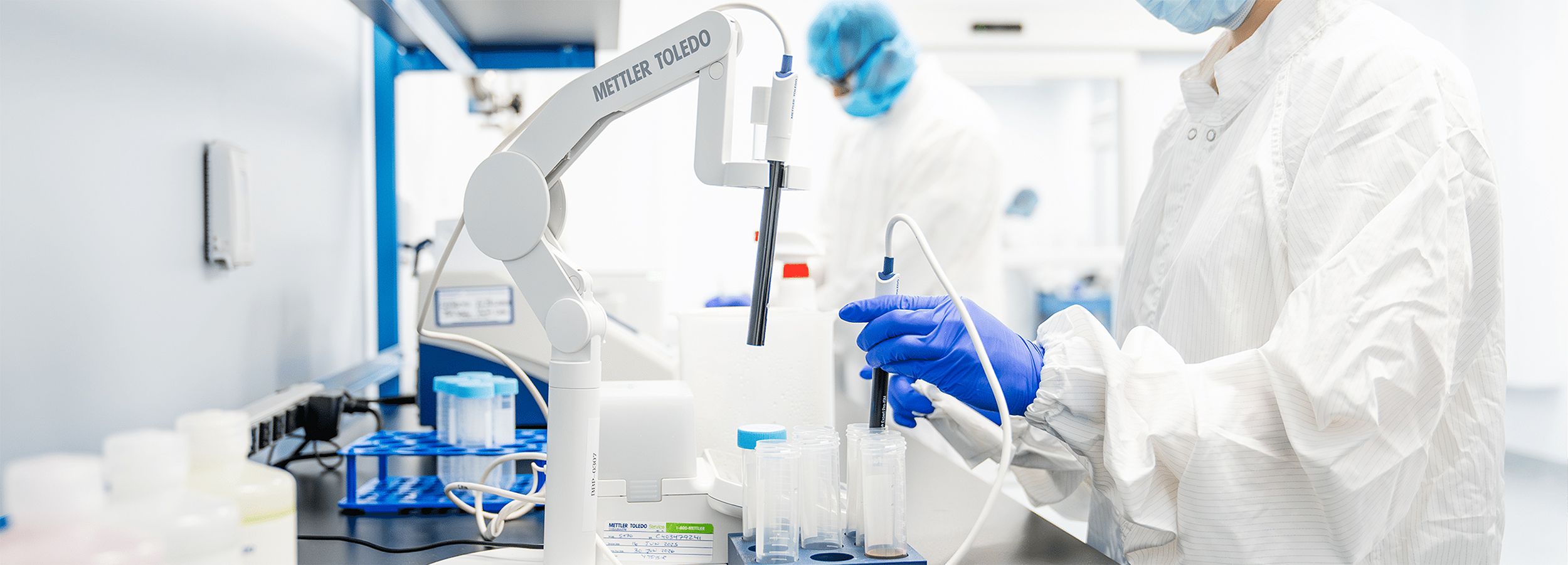
Researcher measuring pH of a solution with a meter in a lab

pH Testing

pH testing confirms reagents have the right pH for your process and reliable results. Many experiments depend on precise pH. Learn more about pH testing.

References

  1. United States Pharmacopeia. 〈791〉 pH. In: USP-NF. Rockville, MD: USP; Dec 1, 2020. DOI
  2. Science History Institute. (n.d.). Søren Sørensen
  3. Yuqing, M., Jianrong, C., & Keming, F. (2005). New technology for the detection of pH. J. Biochem. Biophys. Methods, 63, 1-9

Considerations and Limitations of pH Testing

Temperature

Temperature plays a significant role in pH measurements. With the rise in temperature, the molecular vibrations in the solution rise resulting in the ionization and formation of more hydrogen ions. The formation of more hydrogen ions eventually leads to more acidic behavior of the buffer solutions. Therefore, to achieve highest accuracy in pH determination or adjusting the pH of buffer solutions BBP diligently oversees that calibration and measuring of the pH of buffer solution is done at the same temperature.

Cleanliness of Electrodes

The regular and meticulous cleaning of pH electrodes holds great importance in maintaining the integrity of pH measurements. Coatings, deposits of salts, biofilms, or pollutants on the glass surface of the electrode can render them ineffective, ultimately skewing pH readings. It is imperative to clean the probe before calibration and conducting pH measurements.

Ionic Strength of reagents

The addition of neutral salts, such as sodium chloride, can significantly impact the pH of a buffer solution by altering its ionic strength. Ionic strength, in turn, affects ionization constants, the activity of ionized species in the buffer, and the activity of hydronium ions, ultimately resulting in changes to the solution's pH. To maintain pH consistency, especially when preparing phosphate-buffered saline (PBS) or Tris-buffered saline (TBS) with varying sodium chloride concentrations, it is advisable to use combinations or mixtures of appropriate components to obtain the desired pH.

Dilution of reagents

Dilution of the buffer solution or addition of water (dilution) to a buffer solution can alter its pH due to reduction in ionic strength. This phenomenon is especially true in 5 X or 10 X (PBS and TBS) buffers as the pHs of the 1X diluted buffers are invariably lower than the corresponding 5x 10x buffers. In such cases the pH of the diluted buffers solutions may be adjusted with and acid or base to attain the required/desired pH.

Boston BioProducts

Stay informed about our latest scientific innovations and product updates

By subscribing, you agree to our privacy policy and consent to receive updates

Have a Question?

+1 (508) 231-4777

Mon - Fri: 8am - 5pm

Contact Us

  • Buffers
  • Solutions
  • Media
  • Chemical Powders
  • Water
  • Bioprocessing
  • Custom Buffer Manufacturing
  • Custom Buffer Manufacturing
  • GMP Reagent Manufacturing
  • White-Label and Kitting
  • Custom Buffer Builder
  • Reagent Stability Studies
  • QC Test Builder
  • Quality Assurance
  • Our Facilities
  • Quality Control Testing
  • Documentation Request
  • Content Hub
  • Buffer Calculator
  • FAQs
  • Order Support
  • About Us
  • Contact Us
  • Careers
  • News
  • Events

© 2026 Boston BioProducts. All Rights Reserved.

Privacy PolicyTerms of ServiceSitemap
Boston BioProductsBoston BioProducts
Your quote is empty.
My Cart
  • Products
    Product
    • Buffers
    • Solutions
    • Media
    • Chemical Powders
    • Water
    • Bioprocessing
    • Custom Buffer Manufacturing
    Buffers
    • Good's Buffers
    • Buffered Saline
    • Electrophoresis Buffers
    • Lysis Buffers
    • Standard Buffers
    • Hybridization Buffers
    • HPLC/FPLC Buffers
    • qPCR Buffers
    View all Buffers
    Solutions
    • Acid & Base
    • Balanced Salts
    • Metal
    • EDTA & EGTA
    • Antibiotics
    • Detergent
    • Acrylamide
    • Sugar
    • Fixative
    • Inhibitor Solutions
    • Enzyme
    • Dyes & Stains
    • Luminol & Oxidizing Agents
    View all Solutions

    Featured Products

    Phosphate Buffered Saline, PBS (pH 7.4, Sterile-Filtered)

    Phosphate Buffered Saline, PBS (pH 7.4, Sterile-Filtered)

    Phosphate Buffered Saline (PBS) is a versatile buffer solution widely used in biological research due to its isotonic and non-toxic nature to cells. With a pH range of 7.0 to 7.4, PBS mimics the osmolarity and ion concentrations of the human body, making it ideal for a variety of applications including protein purification, as wash buffer in Western blot and immunoassays, sample dilution, and as a transport medium for tissue samples as well as RNA viruses.

    View product
    Tris-Glycine-SDS Running Buffer (10X)

    Tris-Glycine-SDS Running Buffer (10X)

    The Tris-Glycine-SDS Running Buffer is the most commonly used buffer for the separation/resolution of proteins in their denatured state during SDS-PAGE. It serves as both the anode and cathode buffer during gel electrophoresis and helps to regulate the pH of the electrophoresis system. When diluted to 1X, this buffer regulates pH levels at a pH of about 8.6, which provides reproducible separation of a wide range of proteins into well-resolved bands, depending upon the gel percentage used.

    View Product
    Transfer Buffer (10X, Electro Blotting)

    Transfer Buffer (10X, Electro Blotting)

    The 10X Transfer Buffer-Electro Blotting is the most common buffer used in the wet transfer system for the electro transfer of proteins. The buffer facilitates protein transfer from SDS-PAGE gels to nitrocellulose or PVDF membranes. Ready-to-use solution once diluted to 1X working concentration; Methanol can be added to the final concentration of 10-20% (v/v) as per user protocol. This buffer prevents the gel from swelling during transfer and enhances efficiency of low abundancy proteins and protein binding to nitrocellulose membrane. This buffer is also used as a running buffer for native protein gel electrophoresis.

    View Product
  • Custom
    • Custom Buffer Manufacturing
    • GMP Reagent Manufacturing
    • White-Label and Kitting
    • Custom Buffer Builder
  • Services
    • Reagent Stability Studies
    • Quality Control Testing
    • QC Test Builder
  • Quality
    • Quality Assurance
    • Our Facilities
    • Quality Control Testing
      • Absorbance Testing
      • Bioburden Testing
      • Conductivity Testing
      • Density Testing
      • DNase Testing
      • Endotoxin Testing
      • Microbial Growth Testing
      • Osmolality Testing
      • pH Testing
      • Protease Testing
      • Refractive Index Testing
      • RNase Testing
      • Stability Testing
      • Sterility Testing
      • Viscosity Testing
      • Bubble Point (BP) Filter Integrity Testing
    • Documentation Request
  • Resources
    • Content Hub
      • Product Literature
      • Safety Data Sheets
      • Publications
      • Case Studies & Infographics
      • Protocols
      • Articles & Insights
    • Buffer Calculator
    • Applications
      • Molecular Biology
        • FPLC Protein Purification
        • SDS PAGE
        • HPLC Buffers
        • Plasmid Isolation
        • ELISA Buffers
        • Blood Lysis Buffers
      • Cell Culture
        • Cell Culture Buffers
        • Yeast and Bacteria Culture Media
        • Western Blotting Buffer
        • IHC Buffer
      • Diagnostics
        • Immuno Diagnostics
      • Bioproduction
        • Upstream Bioprocessing
        • Downstream Bioprocessing
    • FAQs
    • Order Support
  • Company
    • About Us
    • Contact Us
    • Careers
    • News
    • Events
My AccountContact Us
Your cart is empty.