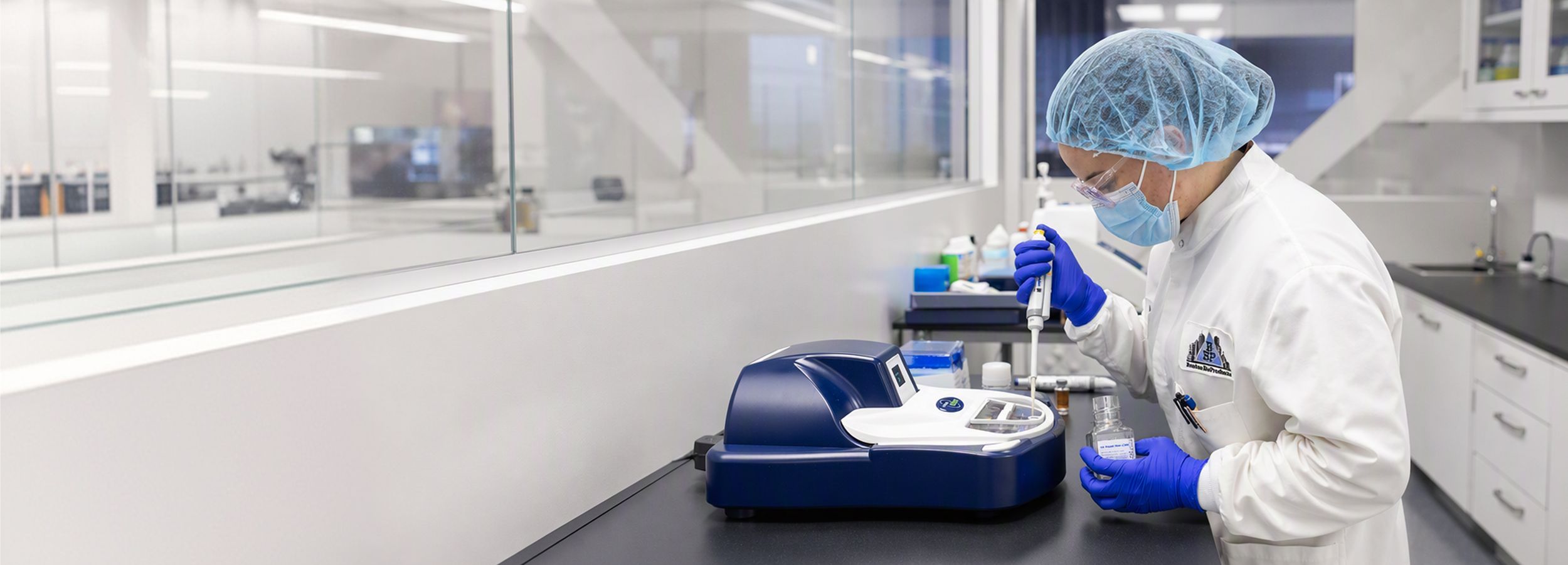
Endotoxin Testing
Endotoxins can trigger severe inflammation in animals/humans and disrupt experiments. Learn how custom reagent endotoxin testing prevents contamination.
Endotoxins can trigger severe inflammation in animals/humans and disrupt experiments. Learn how custom reagent endotoxin testing prevents contamination.
Considerations and Limitations of Endotoxin Testing | |
|---|---|
Level of Endotoxin in Water | Ensure that the water used as a solvent has an extremely low endotoxin level, and regularly monitor and maintain the water filtration system used for development of products. In manufacturing situations lacking access to such filtration systems, it is most cost efficient and safe to purchase water tested for endotoxin. |
Cleanliness of the Environment and Containers | Prepare buffers in a clean environment using clean containers and filter them immediately after preparation to prevent microbial contamination. |
pH | Adjust the pH of the solution to fall within the 6.4 to 8 pH range, as the endotoxin assay functions best in this range. |
Ionic Strength | High salt concentration (> 1M) can inhibit the endotoxin assay, so samples with high salt concentrations should be diluted. |
Presence of Detergents | Detergents can interfere with the detection of endotoxins, so buffer solutions with detergents should be diluted before testing. |
Presence of Chelators | Chelators like EDTA, EGTA or Citrate can inhibit the endotoxin assay, so dilution of samples with chelators is necessary. |
Presence of Chaotropic Agents | Chaotropic agents like urea or guanidine chloride can alter endotoxin aggregates that result in inhibition of LAL activity, so appropriate dilutions are required. |
Presence of Organic Solvents | High concentrations of organic solvents can dissolve lipid A, the lipid portion of endotoxins, leading to inhibition of the assay. |
Presence of Sugars | Impure sugars containing β-glucans can yield false-positive results, so use highly purified sugars. |
Presence of Serum Proteins | Serum proteins such as Bovine Serum Albumin (BSA) or Human Serum Albumin (HSA) can affect endotoxin detection, so dilute samples containing serum albumin. |
Presence of DNA and Fatty Acids | Nucleic acids and fatty acids can cause inaccurate results, so monitor and correct these parameters. |
Physical Agents | Viscosity, color, and turbidity of samples can interfere with absorbance measurements, so manipulate these parameters before testing. |