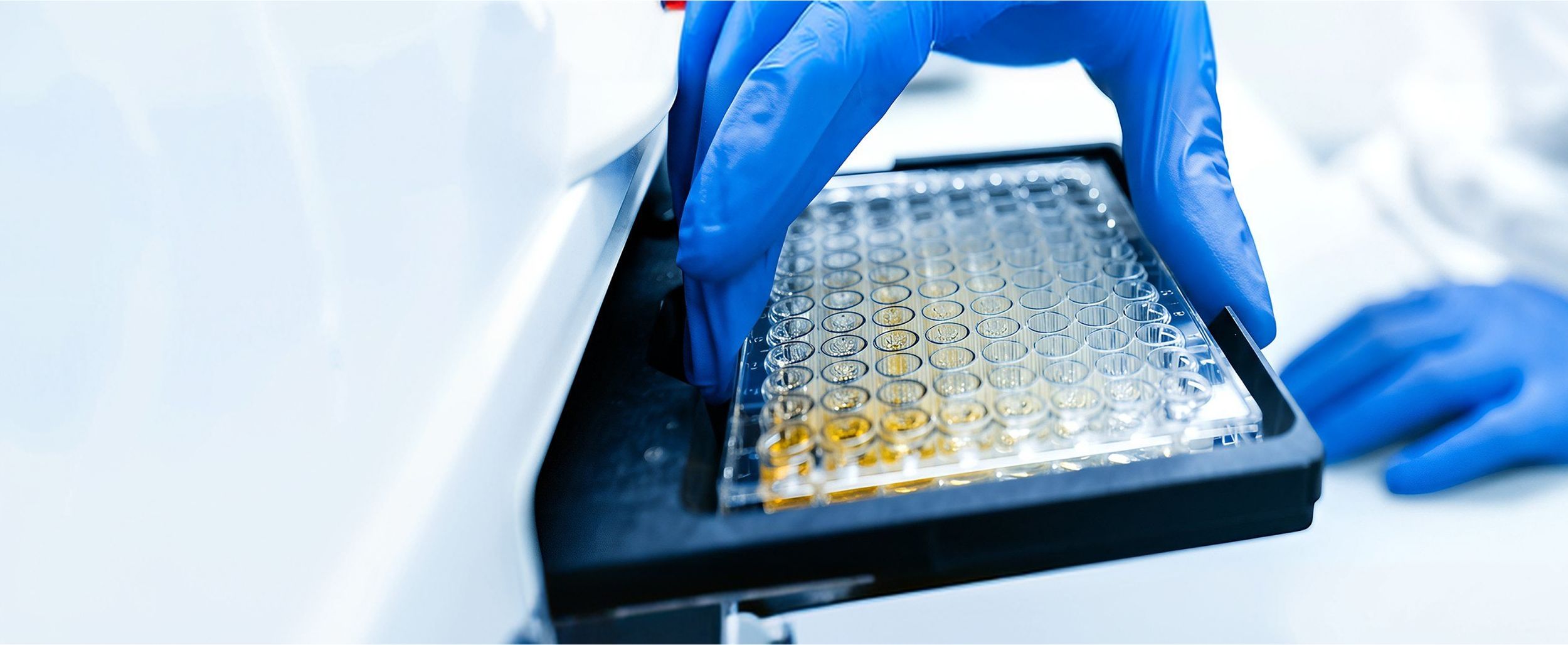
Absorbance Testing
Verify the correct components of your reagent by testing for its unique absorbance spectra when exposed to light. Learn more about Absorbance testing and how it can confirm the purity of your reagents.
Verify the correct components of your reagent by testing for its unique absorbance spectra when exposed to light. Learn more about Absorbance testing and how it can confirm the purity of your reagents.
Considerations and Limitations of Absorbance Testing | |
|---|---|
Formulation Accuracy | The accuracy and reproducibility of absorbance testing is directly associated with the saturation of formulations. All solutes used must be fully saturated in solution prior to sample use. |
Sampling Technique | The accuracy of results depends on proper sample collection techniques. Sampling should occur in a clean, well-regulated environment. |
Temperature and pH of Samples | The temperature and pH of samples can alter the chemical composition of the expected analyte if not carefully monitored, potentially affecting the absorbance spectra of the molecule and absorbance readings. |
Absorbance Range | Beer's law typically requires an absorbance between 0.05 and 1.0 for accurate measurements. If the solution concentration is too high, the solution may be too concentrated, and light may not pass through the sample. If the solution is too diluted, the sample may be affected by noise or stray light. |
Wavelength used | The wavelength used for absorbance testing should match the absorbance spectrum of the analyte. Different compounds have different spectra, and the wavelength used should be chosen carefully. |